Spur Insights combines elite Data Science with proprietary solutions developed for real-world industrial environments. From advanced statistical modeling to generative AI, our team brings the full toolset—and the insight to know when and how to use it.
These four key technologies are foundational to how we deliver results with speed, reliability, and lasting impact.
Adaptive intelligence that
understands change
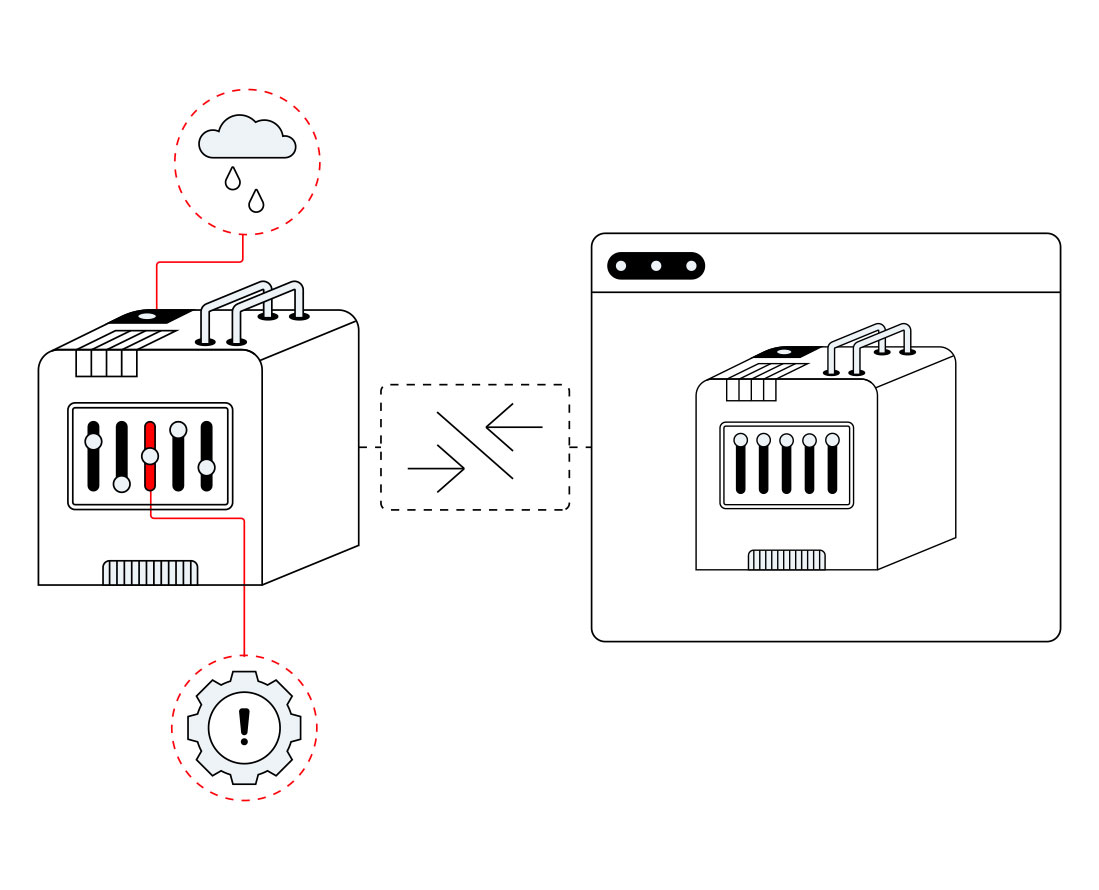
Most predictive systems compare real-time data to a fixed model of how machines should behave. But real-world operations are full of variables no model can anticipate. Learning Twins focus on how performance evolves over time—so you can detect meaningful deviations others miss.
How it works:
Digital Twins: A Static Comparison
Digital Twins compare live machine data against an idealized model of how the machine should perform. But these models rarely account for real-world complexities—like operator behavior, environmental shifts, or regional differences. They flag deviations from the model, even if that “model” is unrealistic.
Learning Twins: A Dynamic Understanding
Learning Twins don’t rely on what should happen. Instead, they analyze behavioral patterns over time to understand what usually happens in your real operating conditions. When performance drifts from that learned norm—even slightly—they flag it early, helping you stay ahead of potential issues.
Static models miss what real-world operations reveal. Learning Twins adapt to context and surface what traditional systems overlook.
The result?
Actionable intelligence based on real change—not rigid assumptions.
Vibration holds the clues.
We make them clear.
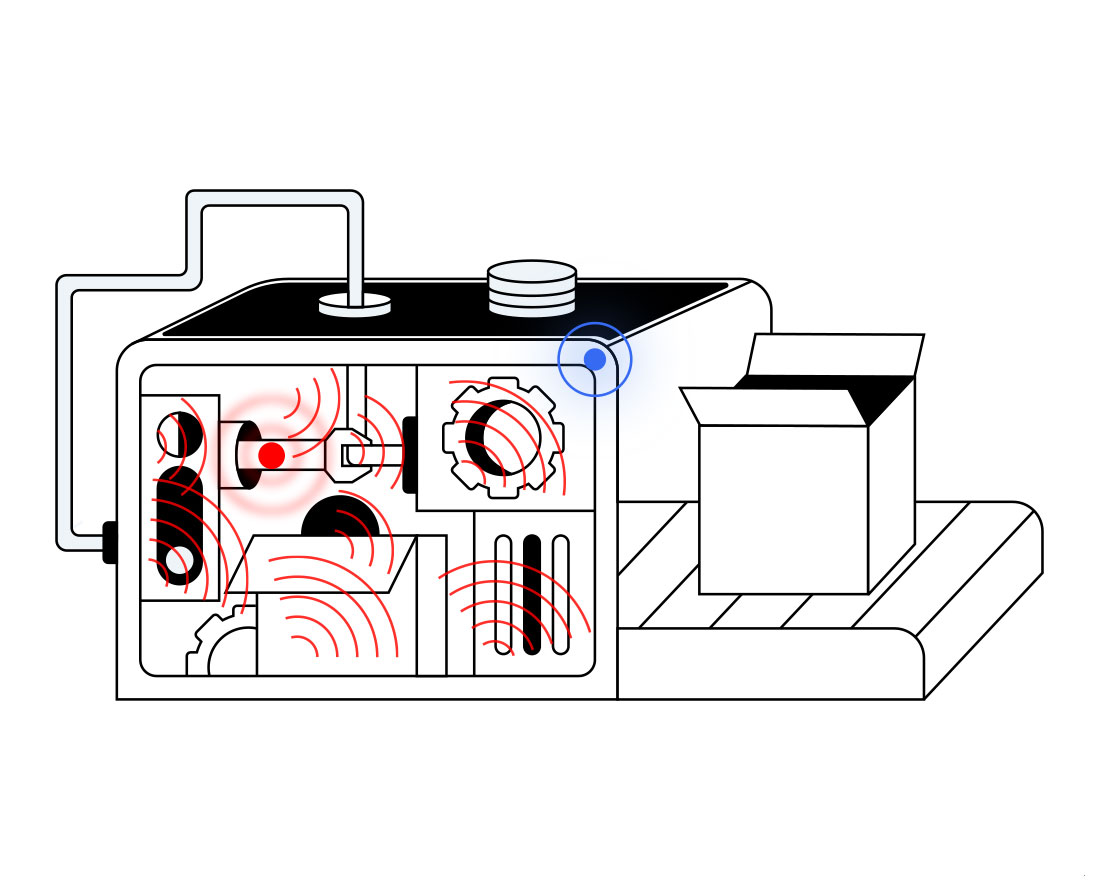
Vibration, sound, and ultrasound carry powerful signals — if you know how to listen. Spur Insights uses Wave Field Analysis to extract meaningful insights from complex wave data, detecting mechanical issues early and cost-effectively.
How it works:
Traditional Sensing Relies on Expensive, Targeted Sensors
Used near suspected failure points, these sensors are precise but costly and limited in coverage. These sensors must be precisely tuned to detect specific issues, which makes them difficult to engineer and place effectively. As a result, they are often impractical for many industrial applications.
Wavelet Analysis Traces Signals Back to the Source
We place a single broad-spectrum sensor on the machine to capture the combined resonance effects as they occur — revealing more with less. Advanced math lets us decode the wave behavior and pinpoint the origin of hidden disruptions. A growing library of known error patterns improves accuracy over time.
Our method turns vibration into early-warning signals without expensive instrumentation.
The result?
Early, reliable detection without the cost.
Wear happens quietly.
iPID makes it loud.
iPID (inverse Proportional-Integral-Derivative) is a proven, math-driven technique that detects wear and tear by analyzing how machine control loops behave. It works across a wide range of machines, requires no extra hardware, and translates complex signals into clear, actionable diagnostics.
How it works:
How PID Control Loops Keep you Machines Running in Perfect Balance
Proportional-Integral-Derivative (PID) Control Loops keep your machines in perfect balance, operating at target performance by adjusting pressure, speed, flow, or other physical properties in real time. They are perfectly tuned by the machine engineer to ensure top performance when all machine parts are working exactly as they are supposed to.
How iPID detects Wear and Tear
iPID observes PIDs as they do their job, without interfering with the machine’s operations. When mechanical deterioration occurs, the PID controllers need to work harder to maintain the machine in balance. By analysing the observed control effort, iPID identifies mechanical degradation – pinpointing the hidden impact of wear and tear on the machine before it causes failure.
iPID enables predictive maintenance without sensors, complexity, or guesswork.
The result?
Accurate, low-effort diagnostics that scale across fleets.
Local insights,
global intelligence
Spur’s federated learning lets machines learn from each other—without compromising data privacy. We analyze performance locally on each machine, then aggregate only the most valuable insights across the network. That means smarter fleets, safer data, and faster decision-making.
How it works:
Machine-Level Learning, No Data Centralization
Each machine runs its own analysis on local data—keeping sensitive operational details private and secure. There’s no need to move raw data offsite.
Shared Learnings, Smarter Systems
Once insights are generated locally, only key findings are shared to a central system. This second-tier analysis connects the dots across machines—enabling network-wide optimization without exposing proprietary information.
Federated learning enables scalable machine intelligence without compromising privacy or performance.
The result?
Privacy preserved.
Intelligence amplified.
Technology is only
half the equation.
Even the best tools need the right approach. Our proven methodology reduces risk, accelerates outcomes, and ensures you only move forward when the value is real.
From predictive diagnostics to advanced machine learning, our technologies are built
to solve real industrial challenges. Let’s explore how we can apply them to your
operations.